
Droplex Industrial
Engineering Reliable Industrial Operations Since 2006
Droplex supports manufacturers and infrastructure operators in strengthening the reliability of critical plant systems.
Since 2006, we have focused on structured reliability across lubrication, fluid transfer, and detection systems — improving asset integrity, operational continuity, and maintenance efficiency.
Reliability is not a reactive function.
It is an engineered discipline.
Our Role
Industrial operations depend on a small number of interconnected systems. When these systems are unmanaged, downtime, cost, and risk increase.
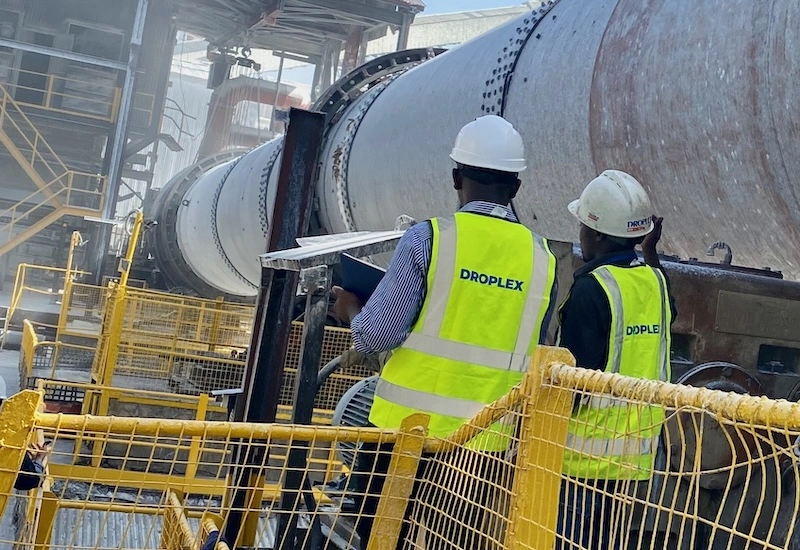
Droplex operates as a structured reliability partner — integrating specialty lubrication, fluid handling, detection technologies, and vacuum systems into cohesive, measurable frameworks.
We do not approach reliability as product supply.
We approach it as system management.
Our Mission
Our mission is simple: to help manufacturing plants run reliably — every single day.
Our Vision
To create a future where every plant runs reliably, every team works confidently, and every community thrives.
We view reliability as foundational to industrial competitiveness, safety, and sustainable growth.
Operating Principles
Our work is guided by five principles:
Partnership
Long-term relationships built on accountability and transparency.
Integrity
Recommendations grounded in performance impact — not preference.
Performance
Every engagement must deliver measurable operational improvement.
Expertise
Continuous investment in engineering capability and industry standards.
Sustainability
Reliability aligned with safety, efficiency, and responsible industrial development.
Long-Term Stewardship
As Droplex approaches two decades of operation, we continue building with a long-term view — strengthening systems, developing people, and expanding capability to serve the next era of African manufacturing.
We are not building for quarters.
We are building for decades.
Begin with Assessment
If your plant is seeking measurable improvements in lubrication, fluid handling, detection, or vacuum systems, we begin with a structured technical assessment.