
Sealless Pumps Explained
Leak-Free Pumping for Critical Applications
In many industrial applications, pump failures are not caused by the impeller — they are caused by the seal.
Sealless pumps eliminate this risk entirely.
What Is a Sealless Pump?
A sealless pump is a type of centrifugal pump that operates without a mechanical seal.
Instead of a seal, it uses a fully enclosed system that prevents any fluid from leaking to the atmosphere.
Result: Zero leakage, improved safety, and reduced maintenance
Why Seals Fail (And Why It Matters)
Mechanical seals are one of the most common failure points in pumps.
Typical issues include:
- Wear due to friction
- Dry running damage
- Chemical attack
- Misalignment
- Pressure fluctuations
Impact on your plant:
- Unplanned downtime
- Product loss
- Safety hazards
- Increased maintenance costs
Types of Sealless Pumps
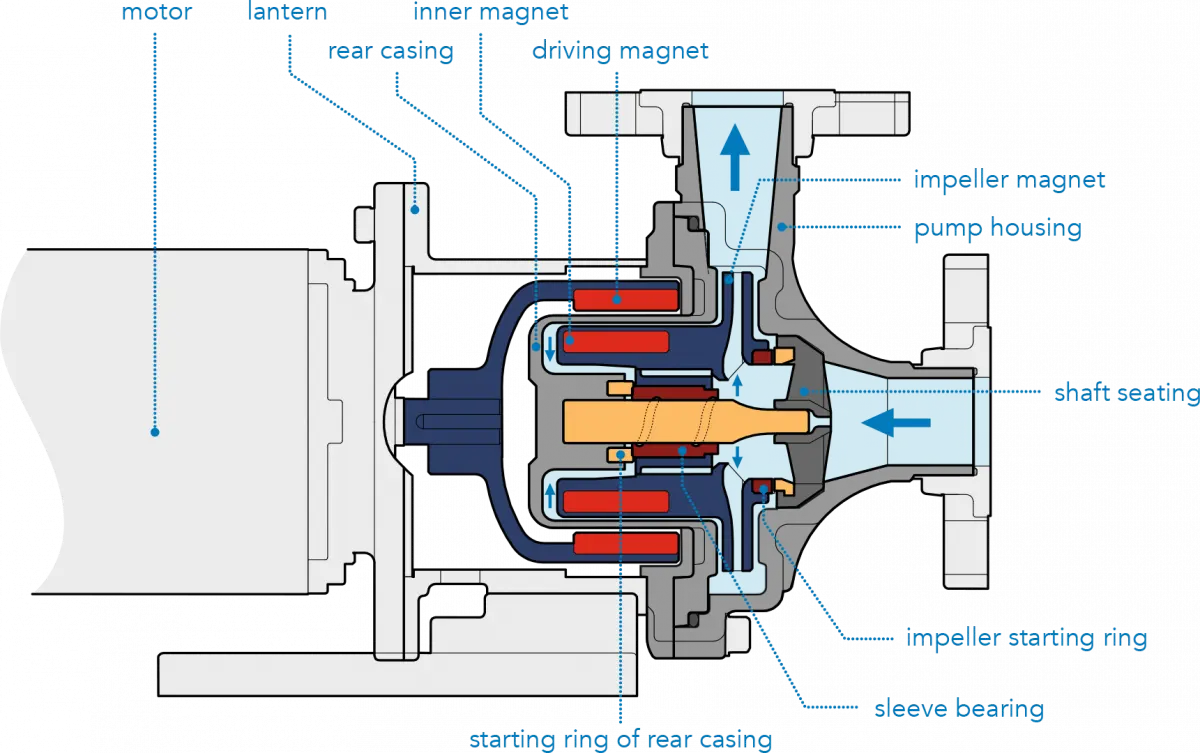
1. Magnetic Drive Pumps
- Uses magnetic coupling to drive the impeller
- No physical connection between motor and fluid
- Ideal for corrosive and hazardous liquids
Most widely used sealless solution in industry.
2. Canned Motor Pumps
- Used in highly specialized applications
- Motor and pump are integrated into one sealed unit
When Should You Use a Sealless Pump?
Sealless pumps are ideal when:
- You are handling hazardous or toxic fluids
- Leakage is unacceptable
- Maintenance access is limited
- You want to reduce lifecycle costs
Why Magnetic Drive Pumps Are the Preferred Choice
For most industrial applications, magnetic drive pumps offer the best balance of reliability, cost, and flexibility.
Not Sure If a Magnetic Drive Pump Is Right for You?
Let us assess your application and recommend the right solution.